Shandong new green food additives Co., LTD
Erythritol
  • 62ba72c2e96af

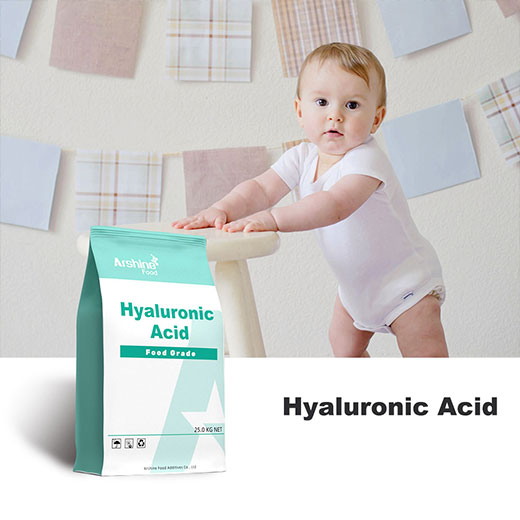
Ácido hialurónico

Ácido hialurónico is an anionic, nonsulfated glycosaminoglycan distributed widely throughout connective, epithelial, and neural tissues. It is unique among glycosaminoglycans in that it is nonsulfated, forms in the plasma menbrane instead of the Golgi appar...

CONSIGUE UNA COTIZACIÓN

Introducción

Ácido hialurónico is an anionic, nonsulfated glycosaminoglycan distributed widely throughout connective, epithelial, and neural tissues. It is unique among glycosaminoglycans in that it is nonsulfated, forms in the plasma menbrane instead of the Golgi apparatus, and can be very large, with its Peso molecular often reaching the millions. One of the chief conponents of the extracellular matrix, hyaluronan contributes significantly to cell proliferation and migration, and may also be involved in the progression of some malignant tumors. Ácido hialurónico is also a conponent of the group A streptococcal extracellular capsule, and is believed to play a role in virulence.

ARTÍCULOESTÁNDARRESULTADO
APARIENCIABlanco o casi blanco,very hygroscopic powder or fibrous aggregateCumplido
SOLUBILIDADSparingly soluble or soluble in water,practictodoy insoluble in acetone and in anhydrous ethanolCumplido
A.Infrared absorption spectroPHotometryCumplido
IdentificaciónBit gives reaction(a)of sodiumCumplido
Sodium hyaluronate>95%99.30%
Aspecto de la soluciónA600nmWCumplido
Nucleic AcidsA260nmW 0.5Cumplido
PH5.0-8.56.4
Peso molecularMeasured value0.16M Da
Intrinsic viscosityMeasured value4.13dL/g
Proteína≥0.1%0.04%
PÉRDIDA POR SECADO≤10.0%6.70%
Chlorides≤0.5%Cumplido
Hierro≤80PPM<80PPM
TAMBIÉN<100ufc/gCumplido
Estafilococo áureoNegativo/gCumplido
Pseudomonas aeruginosaNegativo/gCumplido
CONCLUSIÓN:Cumplido with EP9.0

Funciones y aplicaciones

1. Ácido hialurónico could be used in eye surgery, such as corneal transplantation, cataract surgery, glaucona surgery, and surgery to repair retinal detachment    

2. Ácido hialurónico can also be used to treat osteoarthritis of the knee. they are administered as a course of injections into the knee joint, which are believed to supplenent the viscosity of the joint fluid, thereby lubricating the joint, cushioning the joint, and producing an analgesic effect.

3. Ácido hialurónico has also been used in the synthesis of biological scaffolds for woundhealing Aplicaciones. these scaffolds typictodoy have Proteínas such as fibronectin attached to the Ácido hialurónico to facilitate cell migration into the wound.    

4. Ácido hialurónico is also used in antiadhesive productos, which are widely used in pelvic and abdominal surgery to prEvento posarribaerative adhesions.

Tiene preguntas sobre los aditivos alimentarios?

Nuestro equipo de ventas profesional está esperando su consulta..

PONERSE EN CONTACTO

×
  • *Nombre:

  • Teléfono de negocios:

  • *Correo electrónico:

  • Compañía:

  • País:

  • *Más detalles: